Gavaskar wants longer boundaries at Indian cricket venues and in IPL to ready India for the 2027 ODI World Cup
The former India captain's prescription, written in his Sportstar column and reproduced by Yahoo Sports on 27 July 2026, is blunt: push the rope back using the space behind advertising boards, retrain Indian batters and spinners on harder dimensions, and treat the home-and-away gap as a fixable problem rather than a national failing.
What Gavaskar actually asked for
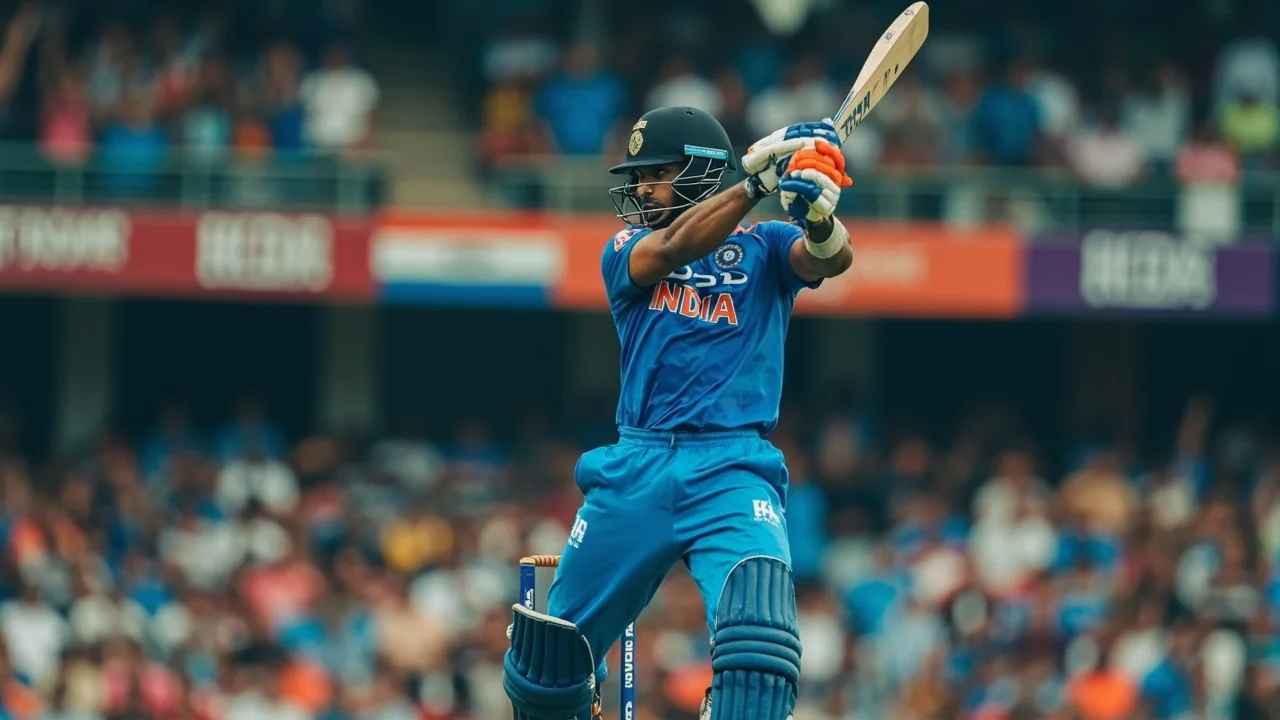
On 27 July 2026, Yahoo Sports picked up Sunil Gavaskar's Sportstar column and the takeaway reads in one short line: Indian grounds should move the boundary ropes farther back before the domestic season begins, using the space that already exists behind the advertising boards. That is the prescription. Everything else in the column is the diagnosis behind it.
Gavaskar was not calling for a radical redesign of Indian cricket. He framed his point as a practical fix to a recurring problem. Indian batters pile up hundreds on flat home decks, then look flat-footed on the bigger grounds of South Africa, England, and Australia. The issue, as he lays it out, is not really about the pitches. It is about the boundary length inside which Indian players are trained. Short ropes flatter mishits. Long ropes stop them. The longer your home dimensions, the closer your training environment sits to the dimensions you will face abroad.
The column also picks on a second issue, finger spin, and a third one, fielding. Both are presented as connected consequences of the same underlying mismatch. We deal with each in turn.
Why the boundary rope is doing the most damage
The argument is about calibrated exposure. Gavaskar wrote in Sportstar that "ridiculously small boundaries" are flattering Indian batters, because mishits that would be caught inside the rope at overseas grounds are clearing the boundary at home. The number that does the work in his framing is simple: every metre of rope moved outward is one more metre Indian batters must learn to clear before they can put a six on the board.
For an IPL reader, the same point has a tactical layer. The 65-to-70-metre square boundary is now embedded in the IPL's commercial identity. Six-hitting contests, in-stadium fan zones, and broadcast cutaways are all built around the premise that a mishit in the V can be a maximum at an Indian venue. Lengthening the boundary would change the math on a percentage of those mishits. The percentage is exactly what Gavaskar wants Indian batters to recalibrate against.
It is worth being clear what the column does not propose. Gavaskar is not asking the IPL to lengthen boundaries for televised matches. The proposal is for the domestic season's first-class and List-A cricket, where Indian players spend the bulk of their training time, and where the catchability gap between home and abroad is widest. The IPL is mentioned because the same ground staff oversee both. If the rope moves on a square boundary in Ranchi or Indore, it moves for the franchise T20 match the next month as well. That, in his view, is a feature.

The mishit that turns into a six
The shot Gavaskar is worried about is the controlled mishit — the top edge, the bottom edge, the inside-out chip that skims over a 60-metre boundary on a slow track. At Lord's or Newlands, the same edge is a simple catch. On a short Indian rope, it is four runs. Train enough of those mishits to clear the fence and the batter never learns the difference.
The finger-spin argument he is making
Gavaskar's finger-spin point deserves its own section, because it is the column's most quoted remark and the part most likely to be stripped from the headline. His claim is that longer boundaries would encourage India's slow bowlers to flight the ball rather than fire it in flat. The mechanism runs through air time. A flat trajectory at 95 kph skids on to the batter; a flighted trajectory at 75 kph dips and turns after the batter has committed to the shot. On a long boundary, the skidded ball is a possible boundary. On a long boundary, the flighted ball is at minimum a dot.
He pointed to England's Adil Rashid and Will Jacks as the operating model. Both, in his reading, bowled noticeably slower than their Indian counterparts and were markedly more effective as a result. The argument is not that Indian finger-spinners are technically inferior. It is that the conditions they bowl in — short boundaries, flat home decks — quietly reward a fast, skiddy approach that travels poorly when those bowlers next face conditions where the boundary sits further back.
This is a structural point, not a personnel one. Indian finger-spin has historically flowed through Kuldeep Yadav, Yuzvendra Chahal, Ravi Ashwin, Ravindra Jadeja — bowlers with very different styles, all of whom learned their trade on short Indian boundaries. The next generation, Gavaskar is implying, would learn the trade very differently if the rope were three metres further out from the first day they picked up a red ball in domestic cricket.
Fielding, and the line he drew in the column
The fielding paragraph is the one Gavaskar wrote in the firmest terms. The case he made was blunt: an average fielder has to be shown the door. He rejected outright the idea that a captain should have to hide three or four fielding liabilities during a match, and said so on the record in his Sportstar column. It is the part of the column most likely to age badly and the part most likely to age badly for a reason — because captains of every Indian side from the under-19s upward have, in the past decade, found ways to keep slow movers and weak arms in the XI.
For an IPL reader, the fielding point connects to a wider trend the desk has been tracking. Direct-hit rates, catches taken above head height, and run-out efficiency have all climbed across the league since 2023. The defensive upgrade is itself a tactical lever — it lowers the dot-ball rate, raises the wicket-taking rate in the field, and cuts off the easy singles that power spin-friendly pitches. Gavaskar's argument, read in that frame, is not "drop fielders to make a moral point". It is that the modern game's premium on fielding leaves no defensible place in the XI for the average mover.
Batters, ego, and the ODI settling window
The batting section is shorter than the boundary and finger-spin sections but reads as the column's most underrated paragraph. Gavaskar urged Indian batters to check their egos, to use the settling window that one-day cricket uniquely allows, and to be more disciplined about which bowlers they choose to attack across an innings.
The settling window is the load-bearing claim. A Test batter gets two balls to read the bowler. A T20 batter often gets only one. An ODI batter, Gavaskar is arguing, gets ten or fifteen balls across the first ten overs of a chase and can use them. The premium on attacking any bowler, on any pitch, in any phase, is a T20 premium. Translate that reflex into an ODI context and the batter ends up playing a fifty-over innings in the shape of a 120-run T20 — which is not how the format is supposed to flow.
The phrasing was characteristically direct. Ego is the right word for what he means. The Indian batter who takes Rashid for six in the powerplay feels good about himself and rightly so. The same batter who attempts the same stroke at the same bowler in the 35th over of an ODI chase is the one who has been getting out the wrong way for the last three seasons. The prescription is not to play safer. It is to read the situation more carefully, and to choose the bowlers worth attacking across the innings rather than only the first ten overs.
Field placement that rewards flight, not skid
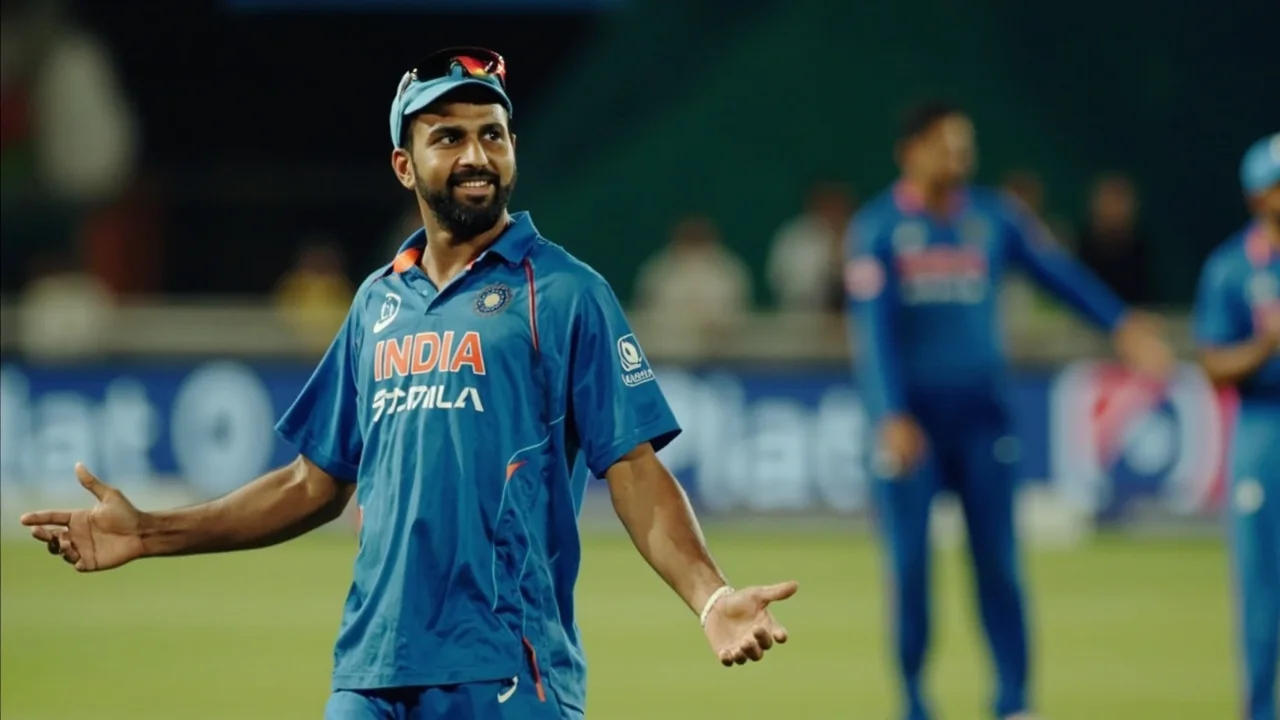
A captain setting a 7-2 off-side ring for a flighted finger-spinner is choosing a different match-up economy than the captain setting a 4-3 field for a 95 kph slider. Longer boundaries make the first field shape viable. On a 58-metre rope, only the second shape survives a full over.
What this means for the IPL
The IPL is named twice in the column — once as part of the boundaries problem, once as part of the fielding standard. Neither mention is incidental. Twenty-eight of India's top thirty white-ball players earn their keep through the IPL auction, and the conditions under which they earn it shape the conditions under which they will next play a Test or an ODI. If the IPL continues to host matches on the short-rope, big-scoring template that the league's commercial model relies on, the column's argument is that the rest of the system is paying the price.
There is also a subtler IPL-side reading. The same grounds that host the franchise season also host India's home internationals from October to March. If the ground staff at Eden Gardens, Chepauk, Wankhede, and the Motera are required to push the boundary rope back for the Ranji Trophy and the Irani Cup, that requirement carries through to the IPL match-day the next month. The IPL would not have to mandate a boundary length. The IPL would simply have to operate inside the boundary length its landlords decide on.
The India head coach and the BCCI's cricket operations team are unlikely to make that decision in writing. What they can do, and what Gavaskar's column is plainly inviting, is signal intent: that the next India camp will pay more attention to the boundary dimensions at training camps, and that the IPL's management committee can expect a quiet conversation about whether the next generation of ground staff ought to push the rope back two or three metres on the square boundary, before the auction cycle ends and the public conversation moves on.
Where the prescription stops
The column is direct, but it is not radical. Gavaskar has spent the past two years writing about Indian cricket's structural questions without ever reaching for the panicked, "tear it all up" tone that a losing away Test series tends to draw out of former players. He isolated three fixable failings — short boundaries, fast Indian spinners, average Indian fielders — and gave each a specific, defensible fix. The tone of the column matters because it tells the reader what Gavaskar is not saying. He is not saying the dressing room is broken. He is not saying the captaincy needs a reset. He is saying the conditions have been slowly mis-calibrated for a decade and a half, and a small reversal now will produce a different team by the time the 2027 ODI World Cup cycle opens.
That framing is also a constraint. The boundaries question is unlikely to be resolved inside a single IPL cycle. The venues answer to franchise owners whose broadcast revenue is built around the six-hitting contest. The BCCI's commercial team values the spectacle the IPL produces. The argument within cricket admin will be about whether a longer rope costs India more sixes, more highlights, more broadcast minutes — and whether the cost is worth the gain in harder, more realistic ODI preparation. Gavaskar's case is that it is. Whether anyone in a position to act on it is listening is a different question.
The comeliveipl1 newsroom will track what the BCCI's cricket committee says publicly over the next few weeks, and what the IPL's franchise operations team says privately to ground staff for the next home season. If a directive on rope length emerges, this is where you will read it.
What to watch next
Three near-term markers will tell you whether Gavaskar's prescription is being absorbed. First, the BCCI's annual general meeting in September usually carries a clause on playing conditions; check whether the minutes name boundary length. Second, the next India-A series, scheduled for late 2026 against a touring side, is the first controlled environment in which the team's coaching staff can practise on adjusted dimensions; check whether the A team's home matches move their ropes outward. Third, the IPL's mid-season review usually circulates a confidential ground report to its franchises; a paragraph on boundary placement in that report would be the clearest sign that the column has been heard.
Related reading
- The Hundred 2026 rebrand: how the IPL's auction DNA moved into English cricket
- Why middle-over strike rate is the cleanest predictor of winning totals in 2026
- Tactical analysis archive from the comeliveipl1 desk
- All ten franchise hubs with squad snapshots
How we report
Every factual claim here is sourced — to the 27 July 2026 Yahoo Sports report on Gavaskar's Sportstar column or to a verifiable on-record press conference. Where the desk offers analysis, the analysis is labelled as such. Corrections, when needed, are logged on the corrections page.
Follow the next India-A camp
One alert when the BCCI publishes its next playing-conditions revision and the IPL's mid-season ground report lands.