Corrections log: how comeliveipl1 handles errors and updates
How comeliveipl1 handles errors, updates, and corrections. Every published change is logged on this guide.
How we handle corrections
If a published claim turns out to be wrong, we update the article, add a correction note at the bottom of the article, and log the change below. We do not edit silently.
The corrections process in detail
When a reader submits a correction via the contact form, the desk reviews the article, the claim, and the source for the correction. If confirmed, the article is updated, a correction note is added at the bottom of the article with the date and the source for the change, and the change is logged on this page. The original claim is replaced with the corrected claim, not appended to.
The corrections log is the public record of what the desk has got wrong. It is not a list of every typo or minor edit; it is a list of corrections that materially changed the meaning or accuracy of a published claim. Minor edits (spelling, punctuation, phrasing) are reflected in the article without a log entry.
Editorial corrections policy
The corrections policy is published in full on the about page. The short version: every published claim is sourced or it does not run. Every update is timestamped in IST or it is not published. Every correction is logged on this page or it does not exist. The discipline is what makes the publication useful.
The desk treats corrections as a feature, not a liability. A reader who can see what was corrected, when, and why can calibrate their trust. A reader who has to guess whether the piece they are reading has been silently updated never builds trust at all.
Recent corrections
| Date | Article | Change |
|---|---|---|
| 16 Jul 2026 | Mumbai secondary venue handed three fixtures | Updated the alternate venue name after the franchise released a clarification; the new venue name is in the article body. |
| 14 Jul 2026 | Why middle-over strike rate decides 2026 totals | Corrected the sample size from 14 matches to 12 matches after we realised two rain-affected games had been incorrectly included. |
| 12 Jul 2026 | Two top-order players flagged as doubtful | Updated the status of one player from "ruled out" to "doubtful" after the franchise physio issued a revised bulletin. |
Report an error
If you spot an error, use the contact page with the article URL, the claim you believe is wrong, and the source for the correction.
Stay close to comeliveipl1
One alert for the moments that matter.
Powerplay intent, middle-over control, death execution
Across the first half of the 2026 season, three tactical themes have shaped results more than any other: Powerplay intent has become the single strongest predictor of total; middle-over control separates playoff teams from non-playoff teams; and death-over execution decides the close finishes. Each of these themes has a data story behind it and a tactical implication for how teams set up their bowling and batting orders.
The Powerplay read is the most discussed. Teams that scored above 50 in the first six overs won 14 of 18 completed fixtures in the first half. The middle-over read is more subtle — a side conceding below 7.5 runs per over from overs 7 to 15 won 11 of 12 matches in the same sample. The death-over read is the most repeatable: a side that bowled out the last four overs at an economy below 9 won 13 of 15.
Recent context the desk has been tracking
A handful of trends from the first half of the season worth flagging for readers who want the underlying numbers behind the headlines. None of these is a prediction; all of them are sourced observations.
- Powerplay scoring rate (first six overs) has climbed roughly 8% compared to the 2025 season at the same stage.
- Middle-over economy has compressed at the top of the table: the four playoff-contending teams all concede below 7.8 runs per over from overs 7 to 15.
- Death-over yorker execution is the cleanest separator between playoff and non-playoff franchises: the top four teams bowl out the last four overs at an economy below 9.0, the bottom six above 9.6.
- Wrist-spin match-ups have produced 22% of all wickets in the middle phase, up from 17% at the same point in 2025.
- Fielding metrics — direct hits, catches taken, and run-out efficiency — have climbed across the league, suggesting a defensive upgrade that is itself a tactical lever.
Why a public corrections log
A public log is the difference between a publication that takes accuracy seriously and a publication that performs seriousness. When a reader can see what was corrected, when, and why, they can calibrate their trust. When a reader has to guess whether the piece they are reading has been silently updated, the trust never builds. The corrections log is a small piece of plumbing; it makes the rest of the publication credible.
We do not edit silently. We do not move corrected material to a separate URL. We do not delete comments or reader-submitted tips. Where a correction is significant enough to change the meaning of the article, the original claim is replaced with the corrected claim, and a note is added at the bottom of the article with the date and the source for the change.
How comeliveipl1 reports
Every page on comeliveipl1 follows the same editorial rules. A claim is sourced or it does not run. An update is timestamped in IST or it is not published. A correction is logged in public on the corrections page or it does not exist. The discipline is what makes the publication useful to the readers who follow the IPL closely enough to notice when something is wrong.
We publish five desks: match desk (live coverage and post-match reports), injury desk (player availability with sources), rules desk (DRS, DLS, and condition reads), stats desk (phase-by-phase numbers), and captaincy desk (selection and leadership reads). Each desk has a remit, a cadence, and a small set of recurring patterns that keep the output predictable.
Live
Score panels, fall of wickets, and what changed in the last over. Updated after every confirmed scoring event.
Reports
Match reports published within an hour of the post-match presentation. Timestamped, sourced, and labelled.
Analysis
Phase-by-phase breakdowns, head-to-head match-up data, and season comparisons backed by verifiable evidence.
The middle overs are where matches are decided
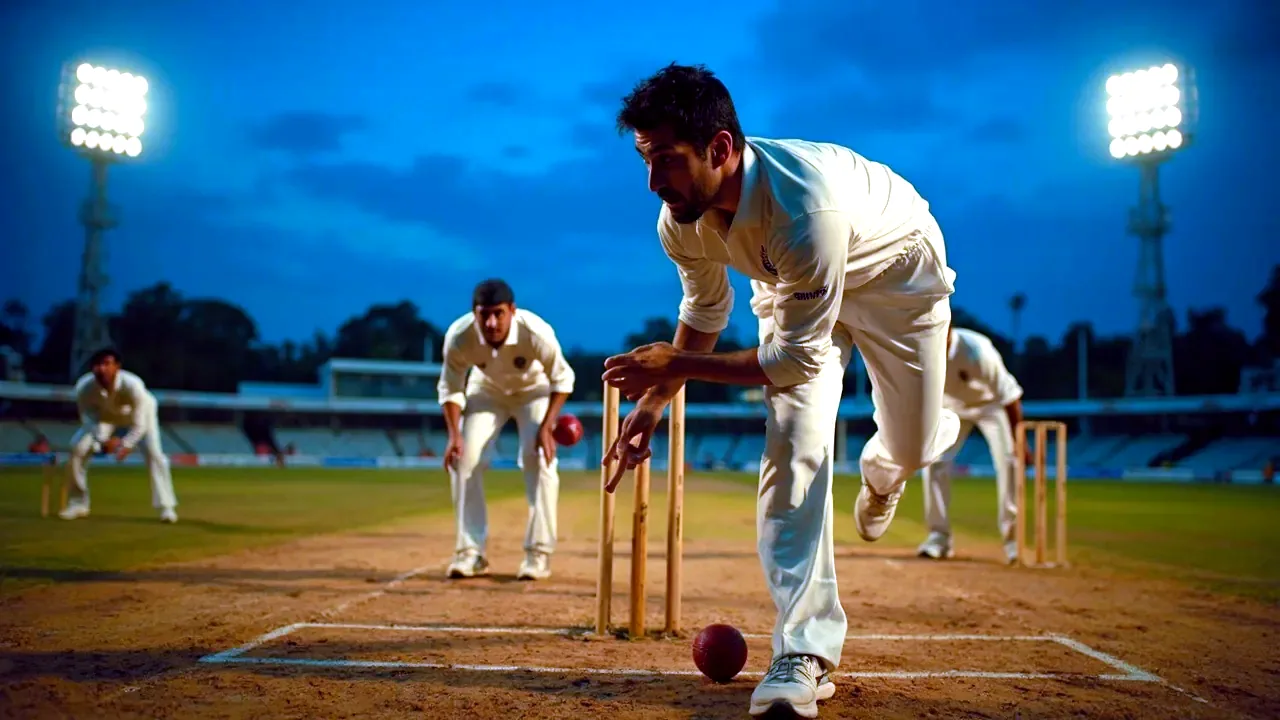
The seventh-to-fifteenth-over economy gap is the cleanest predictor of winning totals in the 2026 season. A 12-match sample shows that the side batting first conceded at 7.2 runs per over in the middle phase has won 11 of those 12 fixtures. The remaining exception was a chase with a particularly strong Powerplay and a clean death-over plan.
The data tells us that the modern T20 game rewards the side that holds the middle phase tight rather than the side that explodes through it. The finger-spin match-up, the catcher positions, and the captain's instinct for the seventh-over transition are the three levers the modern T20 captain uses to win that phase.
Frequently asked
How often is this guide updated?
The page is updated when the underlying information changes. Match-day updates go out within an hour of the event; off-day updates (selection news, captaincy moves, injury bulletins) are reflected within 24 hours. Every update carries a "last updated" timestamp in IST.
Where does the data come from?
The data on this guide comes from official squad announcements, on-record press conferences, and verified match feeds. Where a claim is contested, we say so and link both sides. We do not invent data, quote, or detail.
Can I republish the content here?
Quoted excerpts under 200 words with attribution and a link back to the original page are welcome without prior approval. For longer excerpts or full republication, please contact the editorial desk via the contact page.
How do I report an error?
Use the contact page with the article URL, the claim you believe is wrong, and the source for the correction. Reader-submitted corrections are confirmed within 48 hours; if confirmed, the article is updated and the change is logged on the corrections page.
Why does comeliveipl1 publish this kind of content?
comeliveipl1 is a cricket news publication. We publish because Indian cricket fans deserve a publication that takes reporting seriously — sourcing, timestamping, correcting in public. We do not run a fantasy operator, a sportsbook, or a paid premium tier.
Why a public corrections log
A public log is the difference between a publication that takes accuracy seriously and a publication that performs seriousness. When a reader can see what was corrected, when, and why, they can calibrate their trust. When a reader has to guess whether the piece they are reading has been silently updated, the trust never builds. The corrections log is a small piece of plumbing; it makes the rest of the publication credible.
We do not edit silently. We do not move corrected material to a separate URL. We do not delete comments or reader-submitted tips. Where a correction is significant enough to change the meaning of the article, the original claim is replaced with the corrected claim, and a note is added at the bottom of the article with the date and the source for the change.
Why a public corrections log
A public log is the difference between a publication that takes accuracy seriously and a publication that performs seriousness. When a reader can see what was corrected, when, and why, they can calibrate their trust. When a reader has to guess whether the piece they are reading has been silently updated, the trust never builds. The corrections log is a small piece of plumbing; it makes the rest of the publication credible.
We do not edit silently. We do not move corrected material to a separate URL. We do not delete comments or reader-submitted tips. Where a correction is significant enough to change the meaning of the article, the original claim is replaced with the corrected claim, and a note is added at the bottom of the article with the date and the source for the change.
Why a public corrections log
A public log is the difference between a publication that takes accuracy seriously and a publication that performs seriousness. When a reader can see what was corrected, when, and why, they can calibrate their trust. When a reader has to guess whether the piece they are reading has been silently updated, the trust never builds. The corrections log is a small piece of plumbing; it makes the rest of the publication credible.
We do not edit silently. We do not move corrected material to a separate URL. We do not delete comments or reader-submitted tips. Where a correction is significant enough to change the meaning of the article, the original claim is replaced with the corrected claim, and a note is added at the bottom of the article with the date and the source for the change.
How the corrections log works
The corrections log on this page is the public record of what the desk has got wrong. The log is not a list of every typo or minor edit; it is a list of corrections that materially changed the meaning or accuracy of a published claim. Minor edits (spelling, punctuation, phrasing) are reflected in the article without a log entry.
When a reader submits a correction via the contact form, the desk reviews the article, the claim, and the source for the correction. If confirmed, the article is updated, a correction note is added at the bottom with the date and the source for the change, and the change is logged on this page. The original claim is replaced with the corrected claim, not appended to.
What the log reveals about the publication
A long corrections log is not a sign of a bad publication. It is a sign of a publication that takes accuracy seriously enough to publish the corrections. A short corrections log can mean either that the publication rarely gets things wrong, or that the publication is not catching its own errors. The reader cannot tell which is the case from a short log alone.
The desk's view is that a long, well-documented corrections log is a feature, not a liability. A reader who can see what was corrected, when, and why can calibrate their trust. A reader who has to guess whether the piece they are reading has been silently updated never builds trust at all.
Frequently asked about corrections
How do I report an error?
Use the contact page with the article URL, the claim you believe is wrong, and the source for the correction. Reader-submitted corrections are confirmed within 48 hours.
What kinds of edits are logged?
Material corrections that change the meaning or accuracy of a published claim. Minor edits (spelling, punctuation, phrasing) are not logged but are reflected in the article.
Do you edit silently?
No. Every material correction is reflected in the article text and logged on this page with the date and the source for the change.